Best Website Builder for Managing Multiple Client Sites
Editorial Team··11 min read

Table of Contents
- Why a Dedicated Platform Matters for Client Work
- Feature Comparison: Top Builders for Agencies
- Aleyo: AI-Driven Site Creation at Speed
- Wix Studio: A Dashboard Built for Scale
- Duda: The White Label Website Builder for Agencies
- Webflow and Squarespace: Design Freedom vs Simplicity
- How to Scale Agency Design Operations with the Right Tools
- Managing Client Website Billing and Maintenance
- Frequently Asked Questions
Last Updated: September 6, 2026
Juggling a dozen client logins, scattered assets, and endless revision requests is the reality for many agency owners, yet the choice of platform often makes or breaks that workflow. The best website builder for managing multiple client sites isn't just the one with the prettiest templates; it's the one that centralises billing, simplifies permissions, and scales with your team. In this guide from Aleyo, we break down the top contenders based on hands-on experience and feature analysis, so you can pick the right foundation for your agency operations.
Most guides get this wrong by focusing on design flash rather than operational reality. The true cost of a website builder isn't the monthly fee; it's the hours spent duplicating work, chasing invoices, and resetting client passwords. Below, we'll show you exactly how to evaluate platforms against the metrics that matter for agency profitability, covering everything from white label capabilities to automated maintenance workflows. We'll also share the 5 key features that separate solo freelancer tools from genuine agency-grade platforms.
Why a Dedicated Platform Matters for Client Work
Using a consumer-grade builder for client work creates friction at every turn. A dedicated platform for managing multiple client sites consolidates projects under one roof, offering role-based permissions, bulk editing, and centralised billing that consumer tools simply lack. Without these, you end up with a patchwork of accounts, shared passwords, and manual reporting that eats into your margins.
The operational difference is stark. When you manage multiple client sites, you need a dashboard that shows the health of every project at a glance, not a list of separate logins. A common approach among growing agencies is to standardise on a single ecosystem, which reduces training time and lets designers move between projects without relearning tools.
Consider the security implications too. A platform built for agencies provides granular access controls, meaning you can give a client view-only access without exposing your backend configurations or other clients' data. This is a non-negotiable requirement as your agency scales and takes on more sensitive projects.
Feature Comparison: Top Builders for Agencies
Before diving into individual reviews, it helps to see how the leading platforms stack up on the criteria that matter most. The table below compares the key players across pricing, core strengths, and best-fit scenarios for agency work.
| Platform | Starting Price | Best For | Standout Feature |
|---|---|---|---|
| Aleyo | Contact for pricing | AI-driven site creation | Four specialist AI agents |
| Wix Studio | Contact for pricing | High-volume agencies | Multi-site management dashboard |
| Duda | Contact for pricing | White label needs | Agency branding capabilities |
| Webflow | £12/month | Design control | Professional-grade CMS |
| Squarespace | £14/month | Aesthetic quality | Intuitive interface |
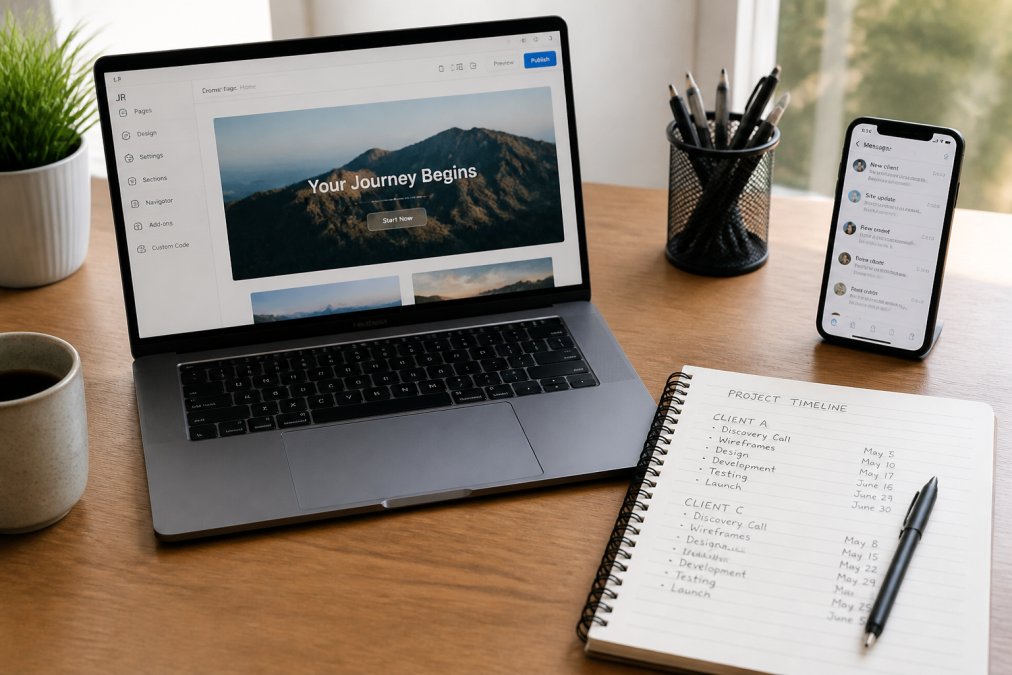
Aleyo: AI-Driven Site Creation at Speed
Aleyo simplifies website development by automating the core creation process, which is a game-changer when you're managing multiple client sites with tight deadlines. Instead of starting from a blank canvas, four specialist AI agents (Piper, Delta, Wren, and Dex) work in sequence to plan, design, and engineer the site, cutting hours off each build.
The live workspace is where Aleyo truly differentiates itself. You can edit copy word-by-word directly on the canvas, which means client revisions are handled in minutes, not days. For agencies, the integrated AI modules for blogging, branding, and e-commerce mean you can offer a wider service scope without hiring specialists, and the real-time traffic and SEO health monitoring gives you a reporting layer that usually requires separate analytics tools.
Aleyo offers 60 free credits on sign-up, letting you test the workflow before committing. The platform is built for speed, so if you're looking to scale agency design operations without scaling headcount, this is an efficient path.
Wix Studio: A Dashboard Built for Scale
Wix Studio is a dedicated platform designed specifically for agencies and freelancers, and it shows in the dashboard. The multi-site management view is excellent for overseeing all client projects, with advanced responsive design tools that give you CSS-like control without touching code. If you're handling a high volume of sites, the client billing and role-based permission management features are genuinely useful.
The integrated AI tools help speed up site generation. The trade-off is a steeper learning curve; Wix Studio is powerful, but your team will need time to master its full capabilities. For agencies that prioritise design customisation and have the time to invest, it's a strong contender, but it may require a more hands-on approach than some other platforms.
Duda: The White Label Website Builder for Agencies
If you're looking for a white label website builder for agencies, Duda is the benchmark. The platform allows you to rebrand the entire editor and hosting experience as your own, which is invaluable for agencies that want to maintain a seamless brand presence with their clients. The client access controls are granular, letting you decide exactly what each client can edit, which prevents accidental breakage.
Duda's team collaboration tools are solid for multi-user workflows, and the automated site migration and template duplication features speed up repetitive tasks. However, the design flexibility is more constrained than code-heavy builders, so if a client demands a highly bespoke layout, you might hit a wall. Duda is best for agencies that value efficiency and branding over pixel-perfect design freedom.
Webflow and Squarespace: Design Freedom vs Simplicity
Webflow offers unmatched design freedom, generating clean code from a visual canvas. For agencies with developers on staff, the CMS is professional-grade, and the workspace management for team collaboration is well thought out. The client billing portal is a nice touch for direct invoicing, but the platform's complexity is a genuine barrier for non-technical users.
Squarespace sits at the opposite end. It's known for industry-leading design templates and a very intuitive interface, making it a quick win for freelancers managing smaller client accounts. The integrated booking and e-commerce features are handy, but the limited customisation compared to open-source platforms means you'll eventually outgrow it if client requests become more complex. For pure design control, Webflow wins; for speed and simplicity, Squarespace is the safer bet.
How to Scale Agency Design Operations with the Right Tools
Scaling an agency doesn't mean working more hours; it means building systems that reduce per-project effort. The right platform is the cornerstone of that system. When you standardise on a tool that automates repetitive tasks, you free up your senior designers to focus on strategy and high-value creative work, which is how you scale agency design operations profitably.
A common mistake is keeping different clients on different platforms because of legacy preferences. This fragments your workflow and kills efficiency. Instead, consolidate on one platform that offers template duplication and automated site generation, so every new project starts from a proven baseline rather than a blank canvas.
The workflow shift is significant. Instead of manually rebuilding navigation, footers, and contact forms for each client, you should be duplicating a core template and then customising it. This approach cuts delivery times dramatically, which directly improves your bottom line and allows you to take on more clients without expanding your team.
Managing Client Website Billing and Maintenance
Managing client website billing and maintenance is often the most tedious part of agency life, but the right platform makes it painless. Look for tools that offer consolidated billing, where you can invoice clients directly from the platform and manage their hosting subscriptions in one place. This avoids the headache of tracking separate renewals and reduces the risk of a client's site going down due to an unpaid bill.
Maintenance should also be proactive, not reactive. A platform with real-time traffic, conversion, and SEO health monitoring gives you the data to spot issues before the client does. You can set up automated reports that deliver performance metrics to your clients on a schedule, which builds trust and reduces the need for status meetings. This is where Aleyo's integrated monitoring shines, as it turns maintenance from a cost centre into a value-add service you can upsell.
When it comes to the best website builder for managing multiple client sites, the decision hinges on whether you want to manage a platform or build a business. Tools like Wix Studio and Duda are excellent for agencies that want granular control and white label options. For agencies that want to automate the heavy lifting of site creation and maintenance, Aleyo's AI-driven workflow is an effective choice.
Frequently Asked Questions
What features should an agency look for in a website builder?
Prioritise a unified dashboard for managing multiple client sites, white-label capabilities to keep your own branding, and granular user permissions. Billing tools that automate invoices and payment reminders save hours each month. Look for SEO monitoring and reporting features so you can prove performance to clients without exporting data manually. Automation is a growing differentiator: platforms like Aleyo use AI agents to handle planning, design and content, which cuts the time spent on repetitive build tasks.
Is it better to use a white-label website builder for client projects?
For most agencies, yes. A white label website builder for agencies like Duda lets clients see your branding, not a third-party logo, which strengthens your position as the expert and makes it harder for clients to leave. It also supports reselling: you can mark up hosting and maintenance fees. The trade-off is usually design flexibility. Some builders restrict how much you can customise. If your clients demand unique layouts, weigh that against the marketing benefit of a clean, branded handover.
How do I manage billing for multiple client websites efficiently?
Use a platform with built-in client billing so invoices generate automatically from the sites you manage. Set up recurring payments and automated reminders to avoid chasing late invoices. If your builder lacks billing tools, connect it to accounting software like Xero or QuickBooks. With Aleyo, you can manage the full lifecycle in one workspace, which reduces the admin overhead of juggling separate tools for hosting, maintenance and invoicing.
Can I use a single dashboard to update multiple client sites?
Yes. Agency-focused builders such as Wix Studio and Duda provide a multi-site dashboard where you can switch between clients, apply global design changes and manage users. Aleyo goes further by automating site creation and content generation across projects, so you can launch a new client site in minutes rather than days. The key is checking that the dashboard supports the specific tasks you do most, whether that is editing copy, adding blog posts or reviewing analytics.
What are the benefits of using Aleyo for agency website development?
Aleyo automates the planning, design and engineering stages using four specialist AI agents that work in sequence. You get 60 free credits on sign-up to test the workflow. The live workspace lets you edit text word-by-word directly on the canvas, and integrated modules handle blogging, branding and e-commerce. For agencies managing multiple client sites, the main benefit is speed: you can deliver more projects without expanding your team, which directly supports scaling your operations.
Choosing the right platform is a strategic decision that affects your agency's capacity and profitability. The challenge is moving beyond tools that require constant manual input toward a system that automates the core development process. Aleyo was built for this shift, offering automated site planning, design, and engineering alongside real-time performance monitoring. Start building with Aleyo and see how much faster you can deliver and manage client sites.
FAQs
- Prioritise a unified dashboard for managing multiple client sites, white-label capabilities to keep your own branding, and granular user permissions. Billing tools that automate invoices and payment reminders save hours each month. Look for SEO monitoring and reporting features so you can prove performance to clients without exporting data manually. Automation is a growing differentiator: platforms like Aleyo use AI agents to handle planning, design and content, which cuts the time spent on repetitive build tasks.
- For most agencies, yes. A white label website builder for agencies like Duda lets clients see your branding, not a third-party logo, which strengthens your position as the expert and makes it harder for clients to leave. It also supports reselling: you can mark up hosting and maintenance fees. The trade-off is usually design flexibility. Some builders restrict how much you can customise. If your clients demand unique layouts, weigh that against the marketing benefit of a clean, branded handover.
- Use a platform with built-in client billing so invoices generate automatically from the sites you manage. Set up recurring payments and automated reminders to avoid chasing late invoices. If your builder lacks billing tools, connect it to accounting software like Xero or QuickBooks. With Aleyo, you can manage the full lifecycle in one workspace, which reduces the admin overhead of juggling separate tools for hosting, maintenance and invoicing.
- Yes. Agency-focused builders such as Wix Studio and Duda provide a multi-site dashboard where you can switch between clients, apply global design changes and manage users. Aleyo goes further by automating site creation and content generation across projects, so you can launch a new client site in minutes rather than days. The key is checking that the dashboard supports the specific tasks you do most, whether that is editing copy, adding blog posts or reviewing analytics.
- Aleyo automates the planning, design and engineering stages using four specialist AI agents that work in sequence. You get 60 free credits on sign-up to test the workflow. The live workspace lets you edit text word-by-word directly on the canvas, and integrated modules handle blogging, branding and e-commerce. For agencies managing multiple client sites, the main benefit is speed: you can deliver more projects without expanding your team, which directly supports scaling your operations.