GoDaddy Alternatives for E-Commerce Store Owners
Editorial Team··11 min read

Table of Contents
- Why E-Commerce Store Owners Leave GoDaddy
- Best E-Commerce Platform for Small Business: Feature Comparison
- Top GoDaddy Alternatives for E-Commerce Stores
- E-Commerce Platform Pricing Comparison
- How to Migrate Your E-Commerce Store Safely
- Which Alternative Suits Your Business Best
- Frequently Asked Questions
Last Updated: 1 September 2026
Why E-Commerce Store Owners Leave GoDaddy
E-commerce store owners who've built on GoDaddy often hit a wall. The platform works fine for basic websites, but it wasn't built from the ground up for selling products at scale. Transaction fees add up quickly, inventory management feels clunky, and customer support doesn't specialise in e-commerce problems.
GoDaddy's ecosystem forces choices that benefit GoDaddy, not your business. Want a specific payment processor? It might not be supported. Need advanced automation for your product catalogue? Third-party apps don't integrate seamlessly. These limits become expensive the moment your store grows beyond a few dozen products.
Many e-commerce owners are exploring a GoDaddy alternative for e-commerce store owners that actually understands online retail. Platforms built specifically for e-commerce now offer better tools, clearer pricing, and automation features that matter when managing inventory, processing orders, and scaling operations.
Best E-Commerce Platform for Small Business: Feature Comparison
The best platform depends on what you're selling, how much control you want, and whether you'd rather invest time learning a platform or money in professional support.
Key differentiators include transaction fees (some charge on top of subscriptions), design flexibility, and automation capabilities. A platform that syncs inventory across channels, generates product descriptions, handles abandoned cart recovery, and provides real-time analytics saves hours weekly, critical for small businesses without dedicated operations teams.
| Platform | Starting Price | Transaction Fees | Best For | Design Control |
|---|---|---|---|---|
| Shopify | £5/month | 2.9% + 30p per transaction | Growing stores needing scalability | Moderate (themes + apps) |
| WooCommerce | Free (plugin) | None (host separately) | Technical users wanting full control | Extensive (WordPress) |
| Squarespace | £12/month | None on Commerce plans | Design-focused brands | Good (templates) |
| Wix eCommerce | £14/month | Zero transaction fees | Flexible design with ease of use | Excellent (freeform editor) |
| Aleyo | Custom pricing | None | Automated setup and SEO optimisation | Moderate (AI-assisted) |
Top GoDaddy Alternatives for E-Commerce Stores
Aleyo: Automated Website Building for E-Commerce
Aleyo automates planning, design, and technical engineering using specialist AI agents. This matters because the first 80% of e-commerce success is getting foundations right: product pages that convert, organised inventory, and checkout flows that retain customers.
Aleyo stands out for integrated automation in product listings and SEO. Rather than manually optimising each page, it generates SEO-optimised descriptions and structures your catalogue automatically. For store owners managing hundreds of products, this saves weeks of work. Real-time monitoring of traffic, conversions, and SEO health shows exactly what's working.
The live workspace with word-by-word editing lets you refine your store without developers or clunky interfaces. You get 60 free credits on sign-up to test the platform before committing.

Shopify: Scalable All-in-One E-Commerce Platform
Shopify is purpose-built for e-commerce. The drag-and-drop builder gets you live quickly. The app store has solutions for virtually every problem: email marketing, inventory syncing, customer reviews, analytics dashboards.
Scalability is genuine. Whether you're selling 10 or 10,000 products, Shopify handles it without performance degradation. Payment processing is built in and secure, with PCI compliance handled automatically.
The trade-off is cost. Transaction fees (2.9% + 30p per transaction) apply unless you use Shopify Payments. Themes and apps add up. For stores doing £500+ monthly revenue, Shopify's fees are reasonable. Customer support is 24/7.

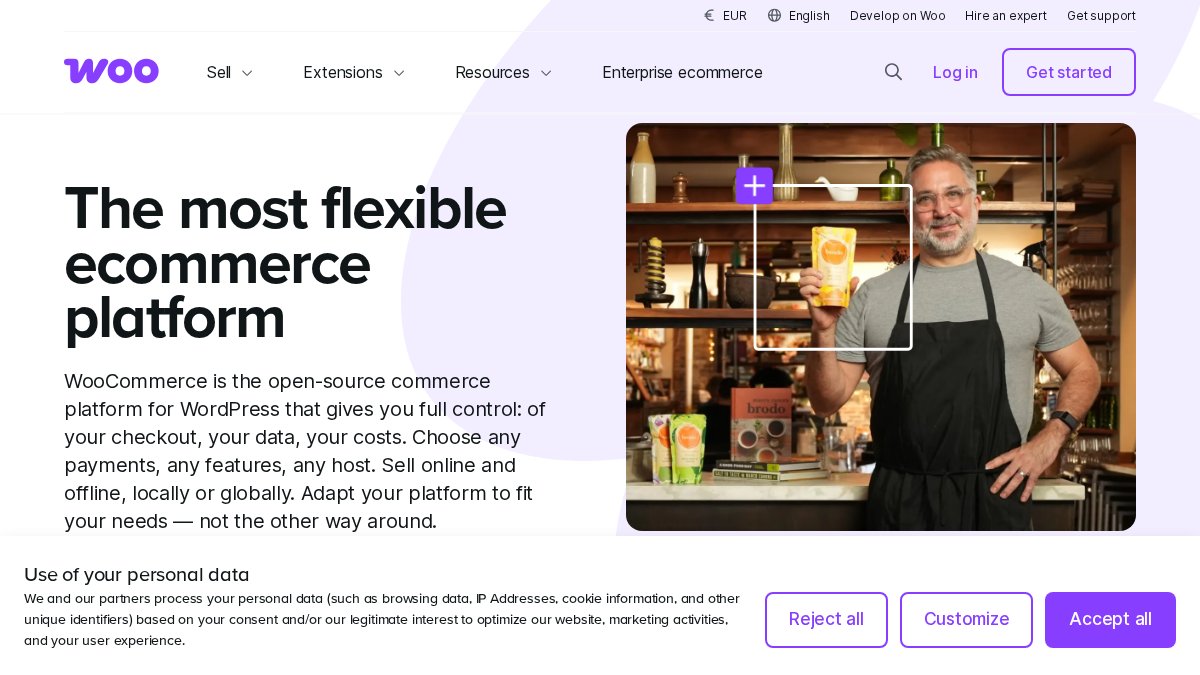
WooCommerce: Full Control for WordPress Stores
WooCommerce is free, open-source, and infinitely customisable. If you already run WordPress, adding WooCommerce is straightforward. You own your data entirely with no platform lock-in.
The flexibility is real, but "free" is misleading. You need hosting (£5-50+ monthly), a domain, SSL certificates, and likely paid plugins for advanced shipping, tax calculations, and inventory management. Security and maintenance fall on you. For non-technical owners, developer costs quickly exceed Shopify's fees.
Squarespace: Design-First E-Commerce Solution
Squarespace prioritises aesthetics. Templates are genuinely beautiful, making it hard to build something amateur. For brands where visual presentation is central, fashion, art, home goods, Squarespace's design tools are superior.
E-commerce features are competent: no transaction fees on Commerce plans, abandoned cart recovery, product variants, subscriptions, and digital products all work. The interface is intuitive for non-technical users.
The limitation is depth. For high-volume operations or complex business logic, Squarespace feels constrained. Reporting is basic compared to dedicated platforms. If your store is primarily a showcase with occasional sales, Squarespace excels. For serious e-commerce operations, you'll outgrow it.
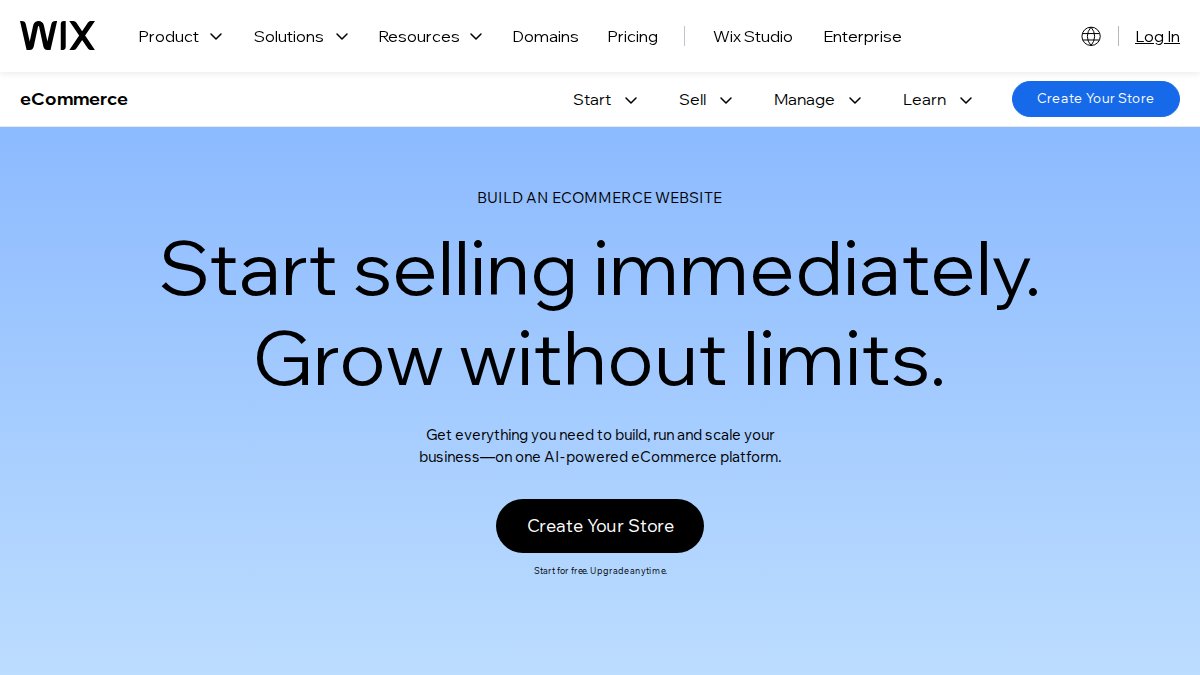
Wix eCommerce: Flexibility with Zero Transaction Fees
Wix eCommerce offers zero transaction fees across all business plans. The freeform drag-and-drop editor provides more design freedom than most alternatives, approaching custom development without requiring code.
The platform handles omnichannel selling reasonably well with social commerce and marketplace syncing. AI-powered features like automated promotions and abandoned cart recovery are built in. For small to medium stores, the feature set is comprehensive.
The Studio editor has a steeper learning curve than Shopify or Squarespace. E-commerce capabilities aren't as strong for very large catalogues or complex models. For stores with 100-500 products where design flexibility matters, Wix delivers real value.
E-Commerce Platform Pricing Comparison
Pricing reveals the true cost of platform choice. Shopify's £5/month starter plan is genuine, but transaction fees (2.9% + 30p per transaction) apply unless you use Shopify Payments. For a store averaging £1,000 monthly revenue with 50 transactions, you're looking at roughly £29 in fees plus subscription.
WooCommerce is free as a plugin, but hosting costs £5-20+ monthly. A paid theme might be £40-100. Essential plugins for tax, shipping, and inventory add £50-200 yearly. Total cost of ownership often exceeds Shopify within 12 months, especially factoring in maintenance time.
Squarespace starts at £12/month for Basic Commerce with no transaction fees. Wix eCommerce starts at £14/month for Studio Standard with zero transaction fees across all tiers. For stores doing £500-2,000 monthly revenue, Wix's pricing is often lowest.
Aleyo's pricing depends on your needs, but it's designed to save money by automating tasks requiring developers or manual setup. The 60 free credits let you validate whether automation saves real time before committing.
The real comparison is subscription plus transaction fees plus your time value. A platform costing more monthly but saving 10 hours weekly is cheaper than one with lower fees demanding constant manual work.
How to Migrate Your E-Commerce Store Safely
Migrating an e-commerce store is technical but manageable with proper planning. The risk is losing data or traffic during transition.
Start by backing up everything: product data, customer records, order history, email lists. Export in formats your new platform can import, typically CSV. Test the import on a staging version first, not live.
Plan your timeline around quiet trading periods. Communicate the change to customers in advance. The technical steps depend on your platforms, but follow this pattern: export from the old platform, clean and standardise data, import into the new platform, test thoroughly, then switch your domain and DNS. Most platforms offer free migration guides or tools.

Spend time testing the new store before going live. Check product pages, checkout end-to-end, and customer account transfers. Monitor closely for the first week after launch, watching for orders and support emails. Keep the old store accessible temporarily in case you need to retrieve missed data.
Which Alternative Suits Your Business Best
The right platform depends on what you're selling, how much control you want, and your technical support access.
For physical products with growing catalogues needing app integrations, Shopify remains the safest choice. You'll pay more in fees, but the platform's maturity means fewer surprises.
If you're technical or have developer resources, WooCommerce offers unmatched flexibility and long-term value.
If design is central to your brand, Squarespace or Wix offer superior design tools. Wix gives more flexibility; Squarespace gives more visual polish.
If you want to minimise fees with a straightforward solution, Wix eCommerce's zero transaction fees make it compelling for stores under £10,000 monthly revenue.
If you want setup itself automated, planning, design, and SEO optimisation handled by AI, Aleyo removes technical burden while keeping you in control. It generates SEO-optimised descriptions, syncs inventory automatically, and monitors performance in real time. You can edit every element without rigid templates. For e-commerce owners tired of learning complex platforms or paying developers, Aleyo's automation changes the equation.
There's no universally "best" platform, only the best fit for your business, budget, and technical comfort. Set up test stores on your top two choices and see how they feel. Check if features you actually need are there. Then decide.
Choosing a GoDaddy alternative for e-commerce store owners shouldn't mean settling for compromises. Today's options are genuinely different: some prioritise ease of use, others prioritise control, others prioritise automation. With Aleyo's AI-powered approach to website building and e-commerce setup, you get a platform handling technical complexity so you focus on products and customers. Start building with Aleyo and launch a professional store without traditional development timelines or costs.
Frequently Asked Questions
Why should I switch from GoDaddy for my e-commerce store?
GoDaddy alternatives often offer better e-commerce-specific tools, lower transaction fees, and more intuitive design interfaces. Platforms like Shopify and Wix provide dedicated inventory management, abandoned cart recovery, and omnichannel selling without the added costs that can accumulate on GoDaddy. Many store owners find they can build and manage their shops faster on platforms designed specifically for e-commerce rather than general website builders.
What features should I prioritise when choosing the best e-commerce platform for small business?
Look for drag-and-drop ease of use, integrated payment processing without hidden transaction fees, built-in SEO tools, inventory management, and customer support availability. For small businesses, scalability matters too, your platform should grow with you without requiring a complete rebuild. Check whether the platform offers marketing automation, email integration, and multi-channel selling capabilities. Compare whether you need design flexibility or prefer pre-built templates that save time.
How difficult is it to migrate an existing e-commerce store to a new platform?
Migration difficulty depends on your current platform and data volume. Most modern platforms offer migration tools or guides to transfer products, customer data, and order history. The main challenges are preserving SEO rankings (redirects are essential), maintaining customer trust during downtime, and testing thoroughly before going live. Planning the migration during low-traffic periods and backing up all data beforehand reduces risk significantly. Many platforms provide dedicated support for migrations, especially for larger stores.
Are there e-commerce platform pricing comparison differences I should know about?
Yes, pricing models vary significantly. Shopify charges per transaction if you don't use Shopify Payments; Wix offers zero transaction fees on business plans; WooCommerce is free but requires separate hosting costs; Squarespace has no transaction fees on Commerce plans. Beyond base subscription costs, consider payment processing fees (typically 2-3%), app or plugin costs, and premium theme pricing. Calculate your total cost of ownership including these extras, not just the monthly subscription.
Can these GoDaddy alternatives handle the scale of my growing e-commerce business?
All the alternatives mentioned, Shopify, WooCommerce, Squarespace, Wix, and Aleyo, are designed to scale from small shops to larger operations. Shopify is particularly strong for high-volume sellers with extensive app ecosystems. WooCommerce scales well if you're willing to invest in hosting and development. Aleyo's automated approach suits businesses wanting rapid setup without technical complexity. Assess your growth timeline: if you expect rapid expansion, choose platforms with proven scalability records and robust support infrastructure.
This article was written using GrandRanker
FAQs
- GoDaddy alternatives often offer better e-commerce-specific tools, lower transaction fees, and more intuitive design interfaces. Platforms like Shopify and Wix provide dedicated inventory management, abandoned cart recovery, and omnichannel selling without the added costs that can accumulate on GoDaddy. Many store owners find they can build and manage their shops faster on platforms designed specifically for e-commerce rather than general website builders.
- Look for drag-and-drop ease of use, integrated payment processing without hidden transaction fees, built-in SEO tools, inventory management, and customer support availability. For small businesses, scalability matters too—your platform should grow with you without requiring a complete rebuild. Check whether the platform offers marketing automation, email integration, and multi-channel selling capabilities. Compare whether you need design flexibility or prefer pre-built templates that save time.
- Migration difficulty depends on your current platform and data volume. Most modern platforms offer migration tools or guides to transfer products, customer data, and order history. The main challenges are preserving SEO rankings (redirects are essential), maintaining customer trust during downtime, and testing thoroughly before going live. Planning the migration during low-traffic periods and backing up all data beforehand reduces risk significantly. Many platforms provide dedicated support for migrations, especially for larger stores.
- Yes, pricing models vary significantly. Shopify charges per transaction if you don't use Shopify Payments; Wix offers zero transaction fees on business plans; WooCommerce is free but requires separate hosting costs; Squarespace has no transaction fees on Commerce plans. Beyond base subscription costs, consider payment processing fees (typically 2-3%), app or plugin costs, and premium theme pricing. Calculate your total cost of ownership including these extras, not just the monthly subscription.
- All the alternatives mentioned—Shopify, WooCommerce, Squarespace, Wix, and Aleyo—are designed to scale from small shops to larger operations. Shopify is particularly strong for high-volume sellers with extensive app ecosystems. WooCommerce scales well if you're willing to invest in hosting and development. Aleyo's automated approach suits businesses wanting rapid setup without technical complexity. Assess your growth timeline: if you expect rapid expansion, choose platforms with proven scalability records and robust support infrastructure.